
Introducing OpenGlob Rooms
A quieter way to connect

There are already countless ways to chat online.
Group chats. Messaging apps. Workplace platforms. Social networks. Video rooms.
We did not build OpenGlob Rooms because chat does not exist.
We built it because something felt off.
Modern communication tools are powerful, but they are rarely calm. They remember everything. They store everything. They notify constantly. They layer features on top of features until conversation becomes heavy.
OpenGlob Rooms started with a simple question.
What if a chat room could exist only for the moment it is needed?
What if it could feel lightweight, intentional, and temporary by design?
That is where Rooms began.
A room that forgets on purpose
OpenGlob Rooms is a realtime chat space that does not try to become your permanent archive. It is designed for temporary collaboration, short discussions, quick decision making, and small group conversations that do not need to live forever.
There is no account required to join.
There is no permanent message history stored across sessions.
When a room ends, the conversation disappears.
That is not a limitation. It is the core idea.
In a world where everything is saved, indexed, and searchable forever, we wanted to build something that respects the present moment.
A design that feels quiet
We care deeply about how something feels before we care about how many features it has.
Rooms follows the same visual philosophy across the OpenGlob ecosystem: clean layout, generous spacing, soft surfaces, and minimal distraction. The interface is intentionally familiar. If you have used modern Google products, you will feel comfortable within seconds.
Here is the current landing experience.
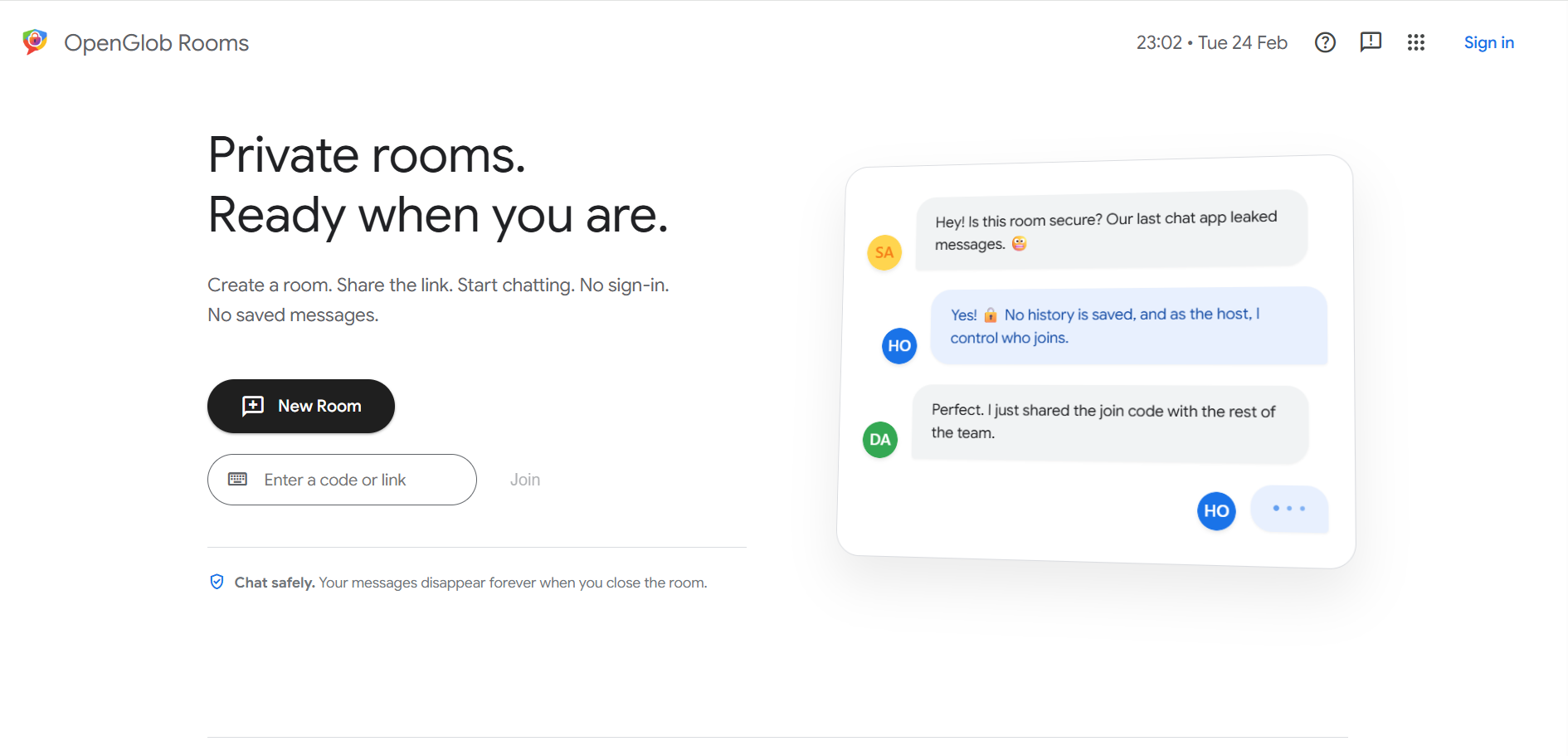
The goal is clarity. When you create a room, the path forward should be obvious. When you join a room, nothing should confuse you. No clutter. No unnecessary controls.
Even the chat interface itself is designed to reduce friction. The bubbles are soft. The spacing breathes. The system messages are subtle. Everything supports the conversation instead of competing with it.
Why build another chat product?
This is the honest answer.
Most chat tools are designed around retention. They want you to stay. They want you to scroll. They want to become your daily workspace.
OpenGlob Rooms is designed around intent.
You open a room because you need a room.
You talk.
You finish.
You close it.
That is it.
We are not trying to replace enterprise communication platforms. We are not trying to compete with social messaging apps. Rooms exists in a smaller space between them. It is for temporary collaboration, quick classrooms, small internal discussions, and private sessions that do not require long term storage.
Sometimes the best tool is the one that leaves no trace.
How it works technically
Under the surface, Rooms runs on a realtime socket based backend built for lightweight session handling. Each room exists in memory. Messages are transmitted instantly to connected participants and kept only within that live session context.
There is no database storing long term message history.
There is no content indexing.
There is no permanent user profiling.
Rooms are created dynamically. A host generates a room. Participants join using a simple code. The host controls settings like entry approval and visibility. When the session ends or becomes inactive, the room state disappears.
This architecture keeps things fast and focused. It also reduces complexity. There are fewer moving parts, fewer background systems, and fewer privacy concerns.
The backend is intentionally simple, designed for stability rather than feature overload. It is not trying to be a super app. It is trying to be dependable.
Currently in internal beta
OpenGlob Rooms is currently in internal beta.
That means it is not publicly rolled out to everyone yet. We are testing performance, session stability, moderation flows, and edge cases before expanding access.
We are learning quietly.
If you try to access it today, you will not immediately enter the product. Instead, you can join the waitlist.
The waitlist is live at:
Early users will receive access first as we gradually roll out availability.
We prefer slow expansion over noisy launches. Stability matters more than speed.
See how early access works
We have recorded a short walkthrough explaining how to join the waitlist and what to expect during the beta phase.
The process is simple. You enter your details, confirm your interest, and once access opens, you will be notified.
A closer look at the interface
Rooms was built to feel modern without being loud. Here is an example of the chat environment.
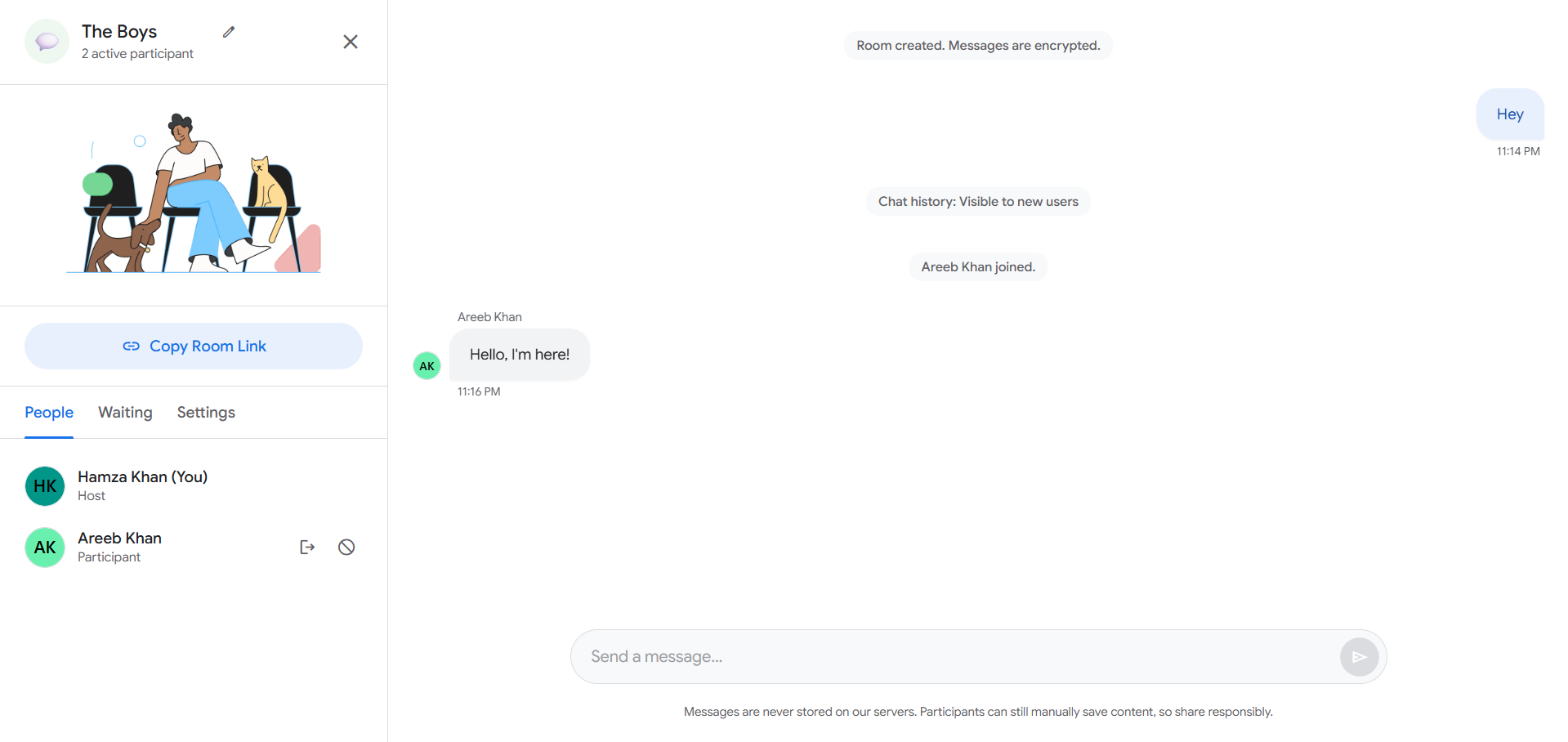
The layout separates conversation from controls. Host actions are clear but not intrusive. Participants can focus on the discussion. The design language remains consistent with other OpenGlob products so that moving between tools feels seamless.
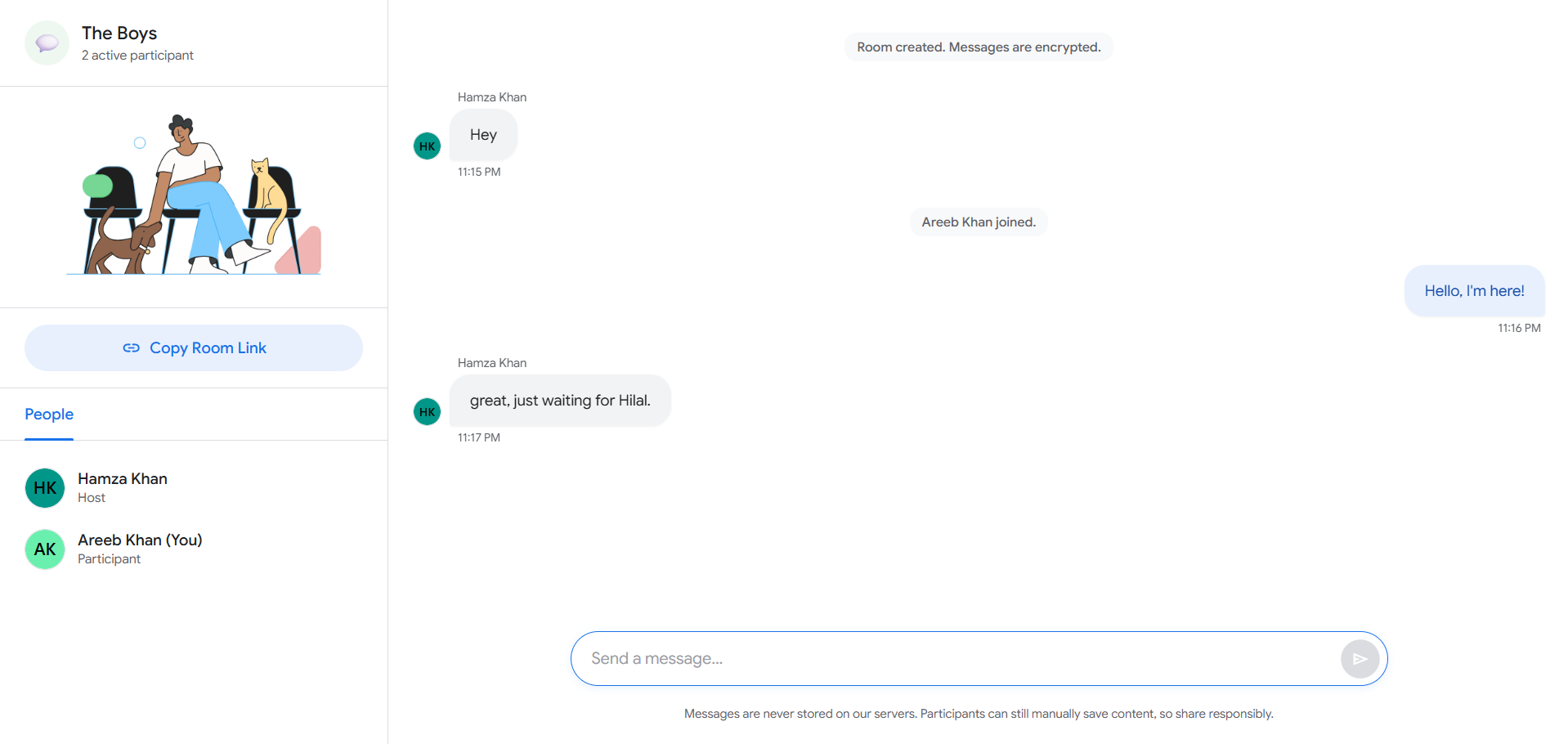
Even small details matter. Button shapes. Hover states. Message alignment. Subtle animations. These things create trust subconsciously.
We believe UI is not decoration. It is communication.
What makes Rooms different
It does not try to compete on feature count.
It competes on clarity.
There are no feeds.
There are no analytics dashboards.
There are no permanent logs.
Just a room.
This simplicity is intentional. When tools do less, they often do it better.
Rooms is built for moments. Planning a study session. Hosting a quick discussion. Running a temporary support channel. Sharing ideas with a small group without committing to another long term platform.
It respects time. It respects attention.
What comes next
During beta, we are focusing on performance tuning, improving host controls, refining UI polish, and understanding real world usage patterns.
We are also exploring lightweight enhancements that maintain simplicity. Things like subtle accessibility improvements, smoother mobile responsiveness, and better moderation flows.
We are not adding complexity for the sake of growth.
We are protecting the core idea.
If Rooms grows, it will grow carefully.
Final thoughts
OpenGlob Rooms is not trying to be everything.
It is trying to be intentional.
In a world where communication tools become louder every year, we wanted to build something quieter. A space that exists when needed and disappears when done.
If that idea resonates with you, join the waitlist.
We are building this thoughtfully, and we are glad you are here at the beginning.
Ameer Hamza Khan
Founder, OpenGlob